Hybrid Car ; Toyota Prius Generation III with the 1000 Patent
 Kompas.
When you have the money and abundant love with the latest technology, Toyota Prius Generation (Gen) III should be considered as a car that will be purchased. Section, which authorized the car will be launched in mid-2010 this issue a lot of the latest advanced technology. So, not just thrifty!
Currently, Prius Gen3 displayed in the Cobo Center, Detroit Auto Show 2009, the public interest for the United States and internationally.
1000 Patent. See the technology carried on the Prius and the new equipment, we can understand the price so expensive. Once complete! due, according to Toyota not less than 1000 patents used in the car to improve its performance and in accordance with the wishes of the present consumers. Also added, all of these patents, 292 patents come from the United States. Not yet known, whether derived from the 'brain' people of Indonesia.
Toyota Prius is very glory and make it as a "benchmark" cars of the future. This can be advised because this time, Prius has been owned by one million people around the world for 10 years, since first launched in 1997. In fact, since the second generation introduced in 2004, the number of Prius sold in the United States reached 670,000 units.
Popularity Prius hybrid car has not been as invincible. Reasonable course, Honda, Toyota among major co mpetitors of Japan, is now campaigning for incentive same type of car, the Insight. The plan, Honda offers a cheaper price of the Prius that can compete globally.
However, when you see a feature that is included in the new Prius, the Honda is quite heavy for the Prius, in addition to relying on consumption of fuel is more economical, which is 21 km / liter, the latest advanced safety equipment.
Ecological plastic. Environmental aspects into focus in the Toyota Prius recently. Emissions are not only friendly to the environment, as well as material. Now the used plastic is made from plants (not oil) and is called plastic. With this, in addition to easy recycling, of course, does not damage the environment.
Atkinson cycle. As a source of prime, Toyota four-cylinder engine uses 1.8 liters of working with the Atkinson cycle. Election machine with a larger aim to get on the lap of torsion low. Target onwards, the consumption of fuel economical. Engine power is not preferred. Therefore, not surprisingly, workers produced only 98 PS engine.
Efforts to create a Toyota Prius engine work more efficiently done with the mechanical components with the power. Therefore, the radiator pump, driven by the electric power and no longer rely on direct energy from the engine. Belt system to operate the radiator fan, AC compressor, Alternator, and also replaced with the electric motor.
Development is the other dimension and weight of the inverter is lighter and smaller. Inverter is a tool to change the direct current (DC) to flow back and either (AC). The inverter, electric motor, trans axle, and also reduce the weight to 20 percent. In addition, the ability to work regenerative brake system (the best restore energy) controlled the electronic logic.
Mode 3. This new Prius offers three alternative mode driving. EV-Mode Drive, a car race with the use of energy from the battery only in low speed for distance around 1.6 km / hour (depending on battery condition). There is also a Power Mode, power to make the car faster and more responsive to the gas pedal board. Last is the Eco Mode, race the car with fuel consumption is economical.
Bottom Cd. Prius is a new test in the wind tunnel is longer than other cars in the history of Toyota. Result, the profile aerodynamics Prius or Cd is the lowest in the world at this time for cars, mass product, which is 0.25. For body shape, hollow, Fender, the form of a wheel with very carefully designed by the engineer and the design of Toyota.
solar energy. The new Prius is equipped with the moon roof of glass that can be incorporated with in slide and solar cell panels. Electrical energy produced solar panel used to set the ventilation air in the car, including when to parking. Another way to energy save the Toyota is using LED lights for the front, rear lights, and brake.
Weight of the car is also lighter. This could be because the engine hood, back door, front axle and Suspense caliper made of aluminum. Result, acceleration 0-96 km / hour is 9.8 seconds, while for the tooth movement, using the Toyota shift by wire system.
Additional sensors are touch switch on the handlebar that is designed to reduce driver eye movement. With this, it is expected that the concentration level driver to the higher road.
Security equipment. The new Prius is equipped with a security system because the top will be sold globally.
For the balloon or SRS (air bag), not only is installed in front of the driver and front passenger. All the doors also been the model of balloon curtains so that drivers and passengers safe when hit by a section on the side. Even for the driver and front passenger, added nothing to the balloon.
In addition to the standard, also have additional security options, namely Dynamic Radar Cruise Control (using millimeter wave radar), Lane Keep Assistant (help drivers stay safe on the track), Pre-Collision System (functioning safety belt to work faster and the brakes on the condition to avoid a collision).
Toyota also offers the Intelligent Parking Assist generation driver that's easy to park in a limited area. Also included in the monitoring of objects behind the car, especially when the back, plus a navigation system with voice activated.
Connect the other is safety, security services, among others, will notice the occurrence of collision, determine the location of the vehicle when stolen, and the SOS call button. Safety Connect available several months after launch.
Although the more sophisticated, unfortunately for the battery, Toyota still rely Nimh. The price can not estimated. Toyota new car prices will determine this before the launch next year. Who knows if there is price correction material prices go down!


 />
/>
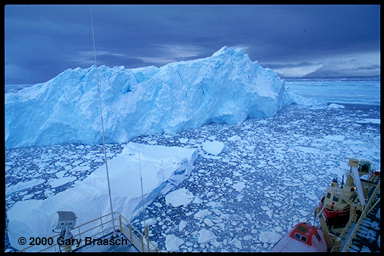

 Another view of the Müller Ice Shelf calving rapidly (right). Across the Peninsula, seven monitored ice shelves have declined by a total of about 13,500 km2 since 1974, according to the National Snow and Ice Data Center. This is nearly the area of Connectcut. On the Larsen shelf (satellite view left), about 3,250 km2 of shelf in area B disintegrated in a 35-day period beginning on 31 January 2002. Eugene Domack, Hamilton College geologist, and others believe this portion of the shelf may have been stable for about 12,000 years before this year's collapse.
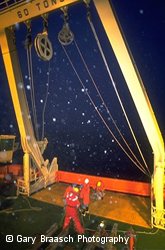 Technicians for the National Science Foundation on the rear deck of the research vessel, Nathaniel B. Palmer, prepare a kasten core device to lower into sediment near the Müller Ice Shelf. This is during a study by Dr. Eugene Domack, funded by the National Science Foundation, on the history of climate in peninsular Antarctica. All ice shelves in the area have been receding, but because they were already floating they do not raise sea level. The concern is that landed glaciers behind the shelves may be next to begin rapid retreat, which would raise ocean levels.
 This mile-long ice cliff of Marr Ice Piedmont, Anvers Island, has receded about 500 meters since the mid 1960s. The cliff's previous position was to the left of the line of ice floating in the harbor and extended to the headland at the extreme upper left. The regional temperature has increased 5° C in winter over the past 50 years. This reduces seasonal icepack, disrupts growth of krill and changes conditions on penguin rookeries.

 A male Adelie penguin, back from a long feeding trip, disgorges krill for its chick. Krill develop best under seasonal ice, so thinner, less extensive winter ice can reduce the size of the shrimp-like Antarctic staple. The tiny radio transmitter on this bird's back allows Dr. Fraser to monitor how far and for how long penguins hunt for food. For some colonies, hunting times are becoming longer and longer as diminished seasonal sea ice extends the distance from rookery to feeding ground.


 Try these easy, low-cost or no-cost energy saving tips.
 See how easy it is to save energy and money. Watch these energy saving tips featuring Shell Busey.